

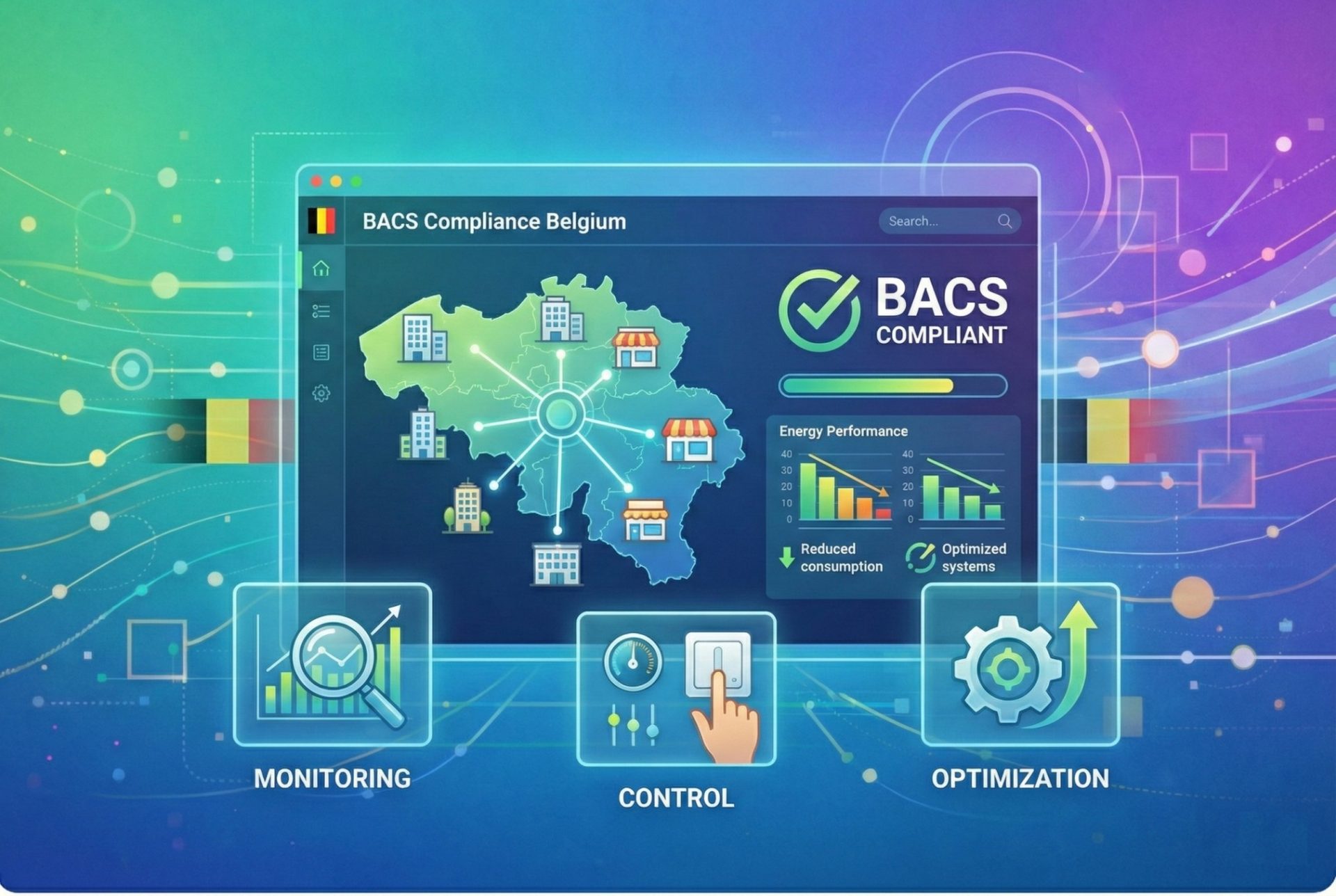
Introduction: BACS compliance in Belgium — a deadline that matters
In Belgium, the energy performance of non-residential buildings is no longer just a matter of best practice. With the European Energy Performance of Buildings Directive (EPBD) translated into Flemish regulation, Building Automation and Control Systems (BACS) have become mandatory for many non-residential buildings. By the end of 2025, large buildings must have been equipped with a system that continuously monitors, analyses and optimises energy use.
The objective is clear: reduce energy waste, improve operational efficiency and accelerate the transition to more sustainable buildings. But for building owners and facility managers, the practical question remains: how do you become BACS compliant without adding complexity?
This is where Energis.Cloud comes in. Rather than replacing existing systems, Energis.Cloud acts as an intelligent energy layer on top of your meters, sensors and Building Management System (BMS), helping you meet every BACS requirement while turning compliance into real operational value.
How Energis.Cloud Helps
The Flemish government defines clear technical requirements for BACS. Below, we follow the same structure and explain how Energis.Cloud supports each obligation in practice.

A. Monitoring and recording energy use
At the heart of BACS lies reliable, long-term energy monitoring. Energis.Cloud is built exactly for that purpose.
Energis.Cloud can integrate data from multiple data sources: electricity meters, gas meters, heat meters, water meters, submeters and IoT sensors. Whether data comes directly from meters, via gateways or through existing systems, it is brought together in one secure platform.
This makes it straightforward to answer precisely the following BACS technical requirements related to metering data:
- Electricity meters are read at least every 15 minutes
- Other meters are read at least hourly
- All data is stored for a minimum of 5 years
- The first 13 months remain available at full resolution, after which data can be aggregated monthly
With Energis.Cloud, this happens automatically. No spreadsheets, no manual exports — just continuous, compliant data collection that is always ready when audits or inspections arise.
B. Communication with technical systems
In many buildings, energy data already exists — but is locked away inside a BMS.
Energis.Cloud is designed to interface with a wide range of BMS platforms such as Honeywell, Johnson Controls, Siemens, Priva and communication protocols (oBIX, MQTT, HTTPS). Submeters, HVAC systems and lighting controls that are already connected to a BMS can feed their data directly into Energis.Cloud.
This avoids double investments and allows organisations to reuse existing infrastructure, while still complying with the communication requirements of a modern BACS.
C. Analysing energy use and acting when needed
This is where the Energis.Cloud Consumption Monitoring Application truly adds value: by transforming raw energy data into actionable insight.
Energy use is clearly visualised per energy carrier and per meter, across different time periods. Interactive graphs and tables make it easy to understand consumption patterns at building level, zone level or even per installation.
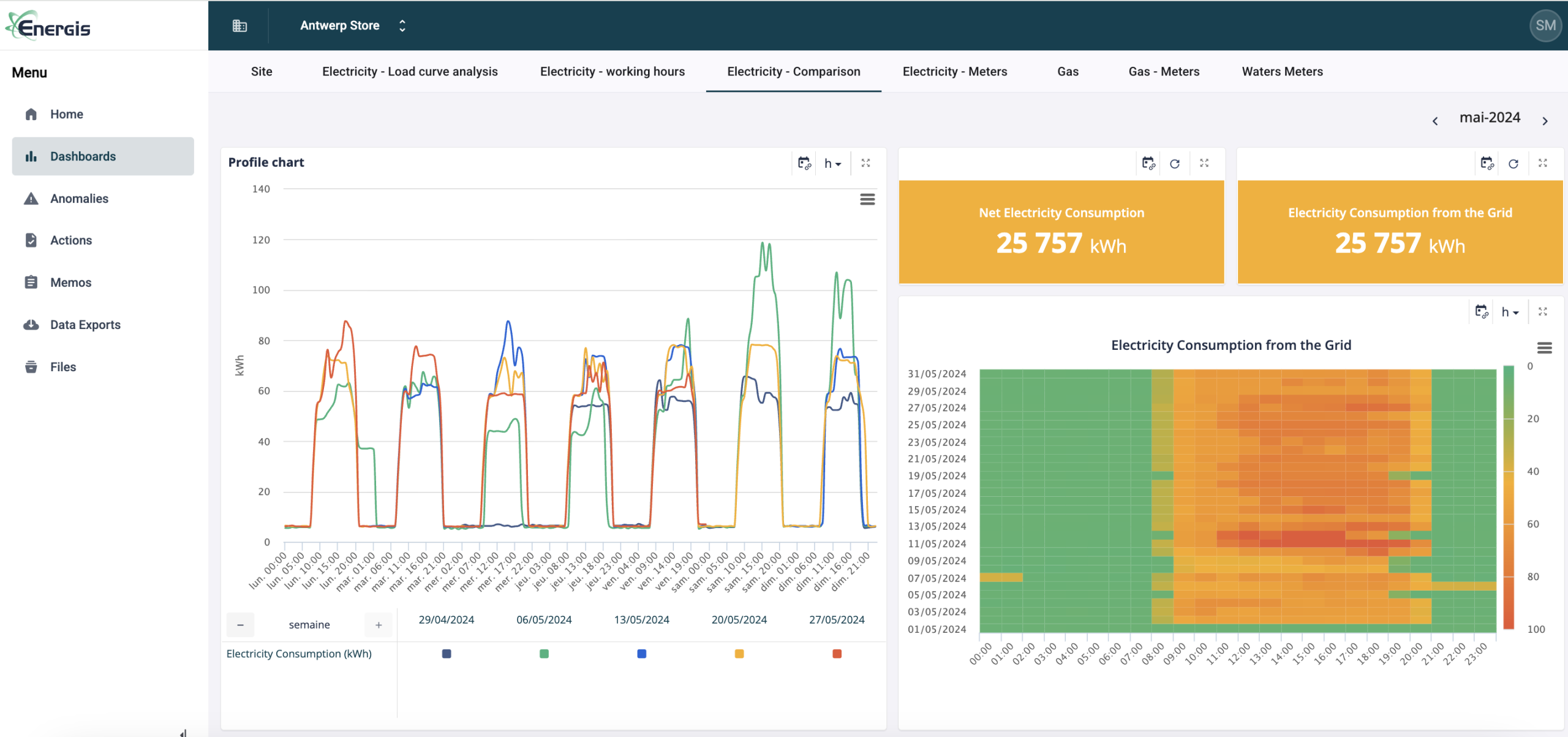
Beyond visualisation, the Consumption Monitoring Application enables energy use to be systematically compared:
- Against historical reference periods
- Against targets and budgets
- Between meters, energy carriers or buildings within a portfolio
To ensure deviations never go unnoticed, Energis.Cloud includes energy anomalies. These anomalies can be time-based or usage-based — for example, detecting excessive night consumption or unexpected peaks.
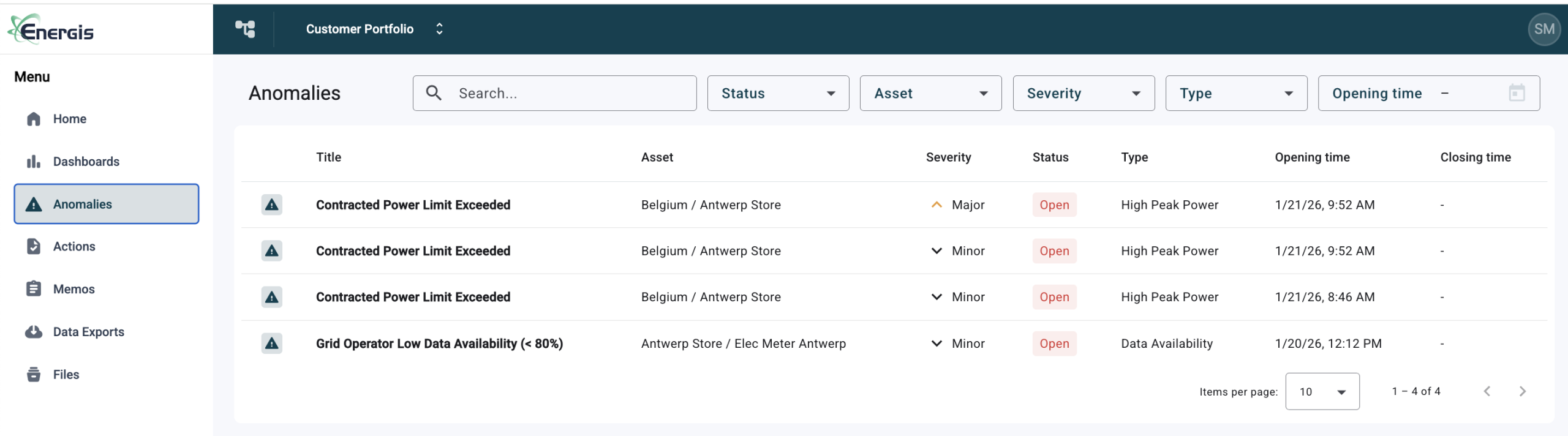
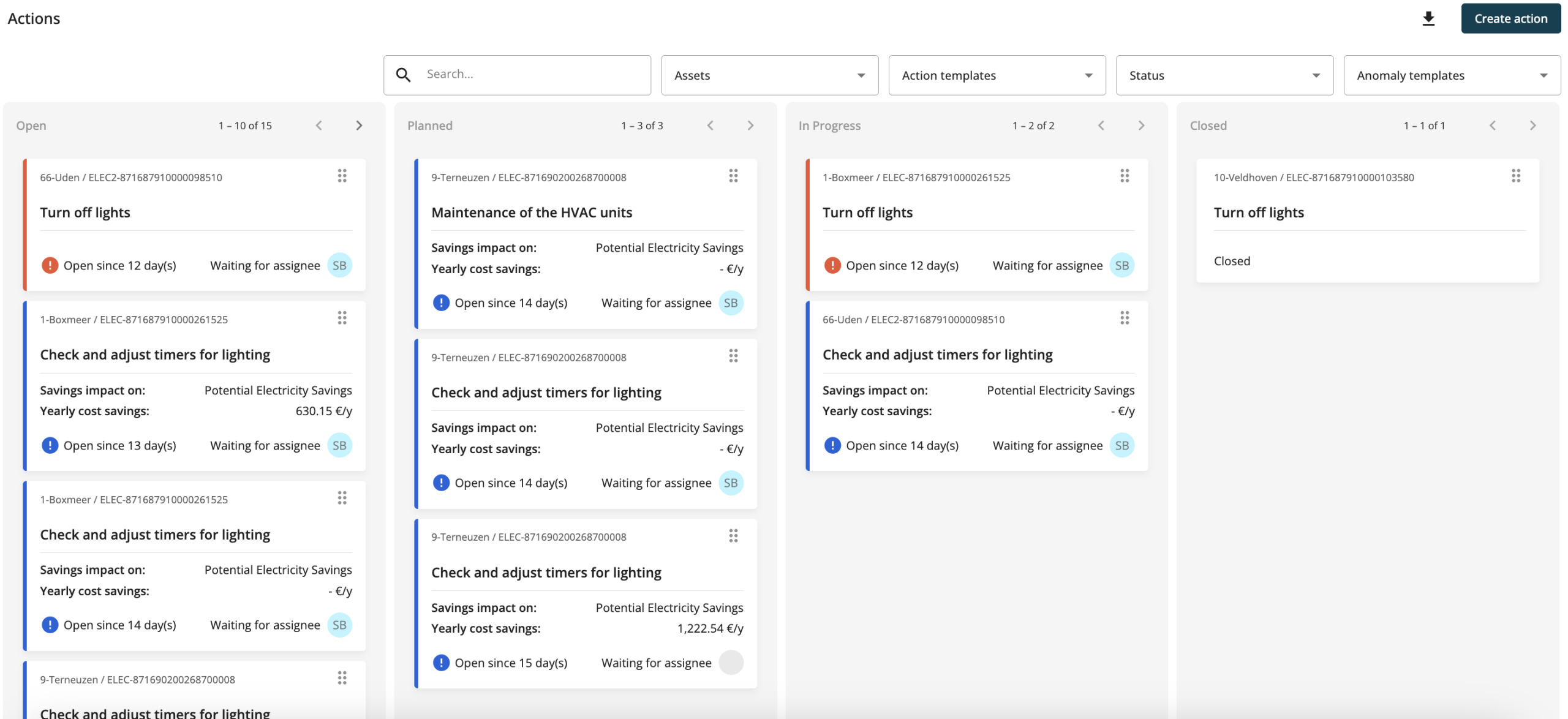
Just as importantly, the Consumption Monitoring Application supports a structured anomaly handling process. Anomalies are configured with defined thresholds, sent to the right people at the right time, and linked to concrete follow-up actions. This ensures compliance with BACS requirements for structured energy management, going beyond passive monitoring to enable continuous improvement and operational control.
D. Controlling and optimising technical building systems
BACS is not only about measuring energy, but also about improving how technical systems perform.
With Energis.Cloud, KPIs of technical installations can be monitored in real time, making it easier to detect efficiency losses in HVAC, heating or cooling systems. If diagnostic data is available from the installation itself, it can be integrated directly. If not, Energis.Cloud works with additional meters or sensors to reveal hidden inefficiencies.
Beyond monitoring, Energis.Cloud acts as a central front end for technical systems. Facility managers can navigate from Energis.Cloud to their existing BMS.
Through the Energis.Cloud Remote Control Application, facility managers can remotely control HVAC and lighting systems via the Energis gateway as a lightweight alternative where traditional BMS control would be too costly.
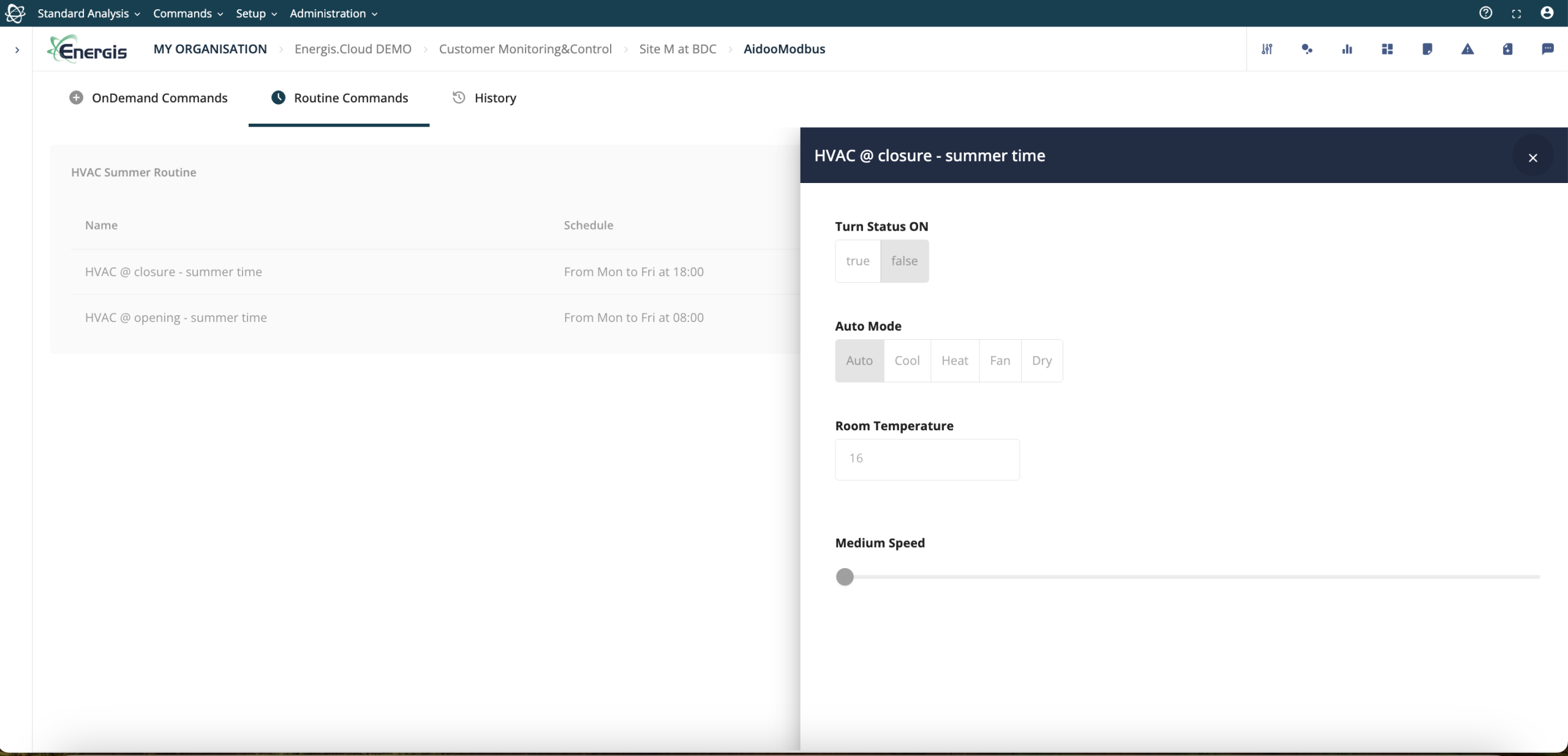
The Remote Control Application is designed to address two common challenges:
- Cost: full BMS control is often expensive to deploy and maintain, especially for smaller sites
- Scalability: managing and coordinating control across many buildings is complex, while Energis.Cloud is designed to make this simple at portfolio scale
This becomes especially valuable in buildings where heating and cooling systems coexist. Energis.Cloud helps prevent energy destruction, ensuring systems are coordinated rather than working against each other.
E. Renewable energy and energy storage
Modern BACS systems must optimise the self-consumption of renewable energy.
The Energis.Cloud PV Monitoring Application provides detailed monitoring of on-site renewable production, such as photovoltaic installations. It offers clear visibility into PV output, performance, and availability, enabling operators to understand how locally generated energy is produced and used.
By combining production data from the PV Monitoring Application with consumption data across the site or portfolio, Energis.Cloud helps identify opportunities for load shifting, energy storage, and smarter use of locally generated energy. This supports better alignment between generation and demand, reducing reliance on grid energy.
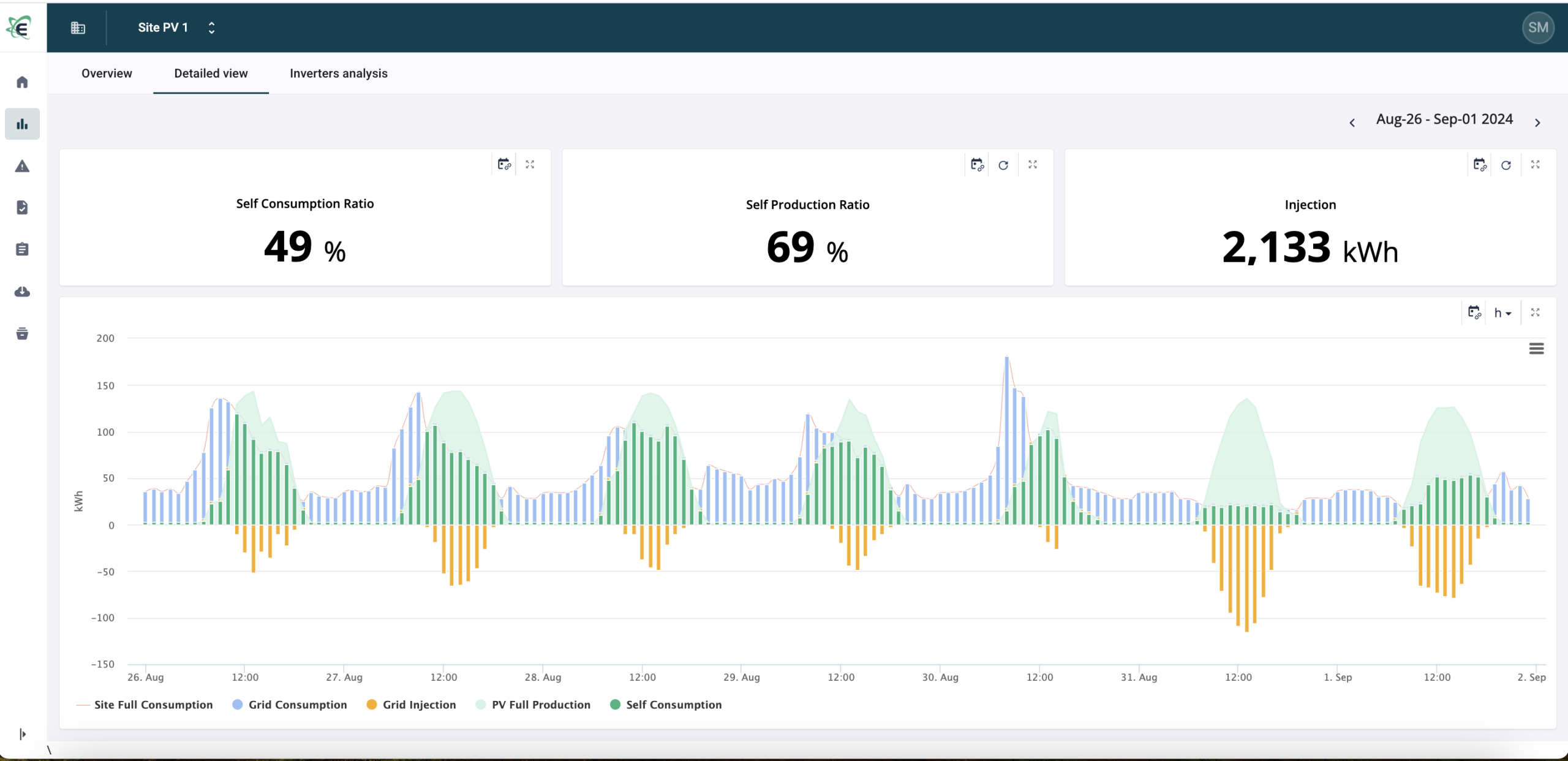
This approach not only supports regulatory compliance, but also strengthens the business case for renewable energy investments by maximising self-consumption, improving system performance, and increasing the overall value of on-site generation assets.
F. Lighting automation (from 2028)
From 2028, lighting in most non-residential spaces must automatically switch off when no presence is detected.
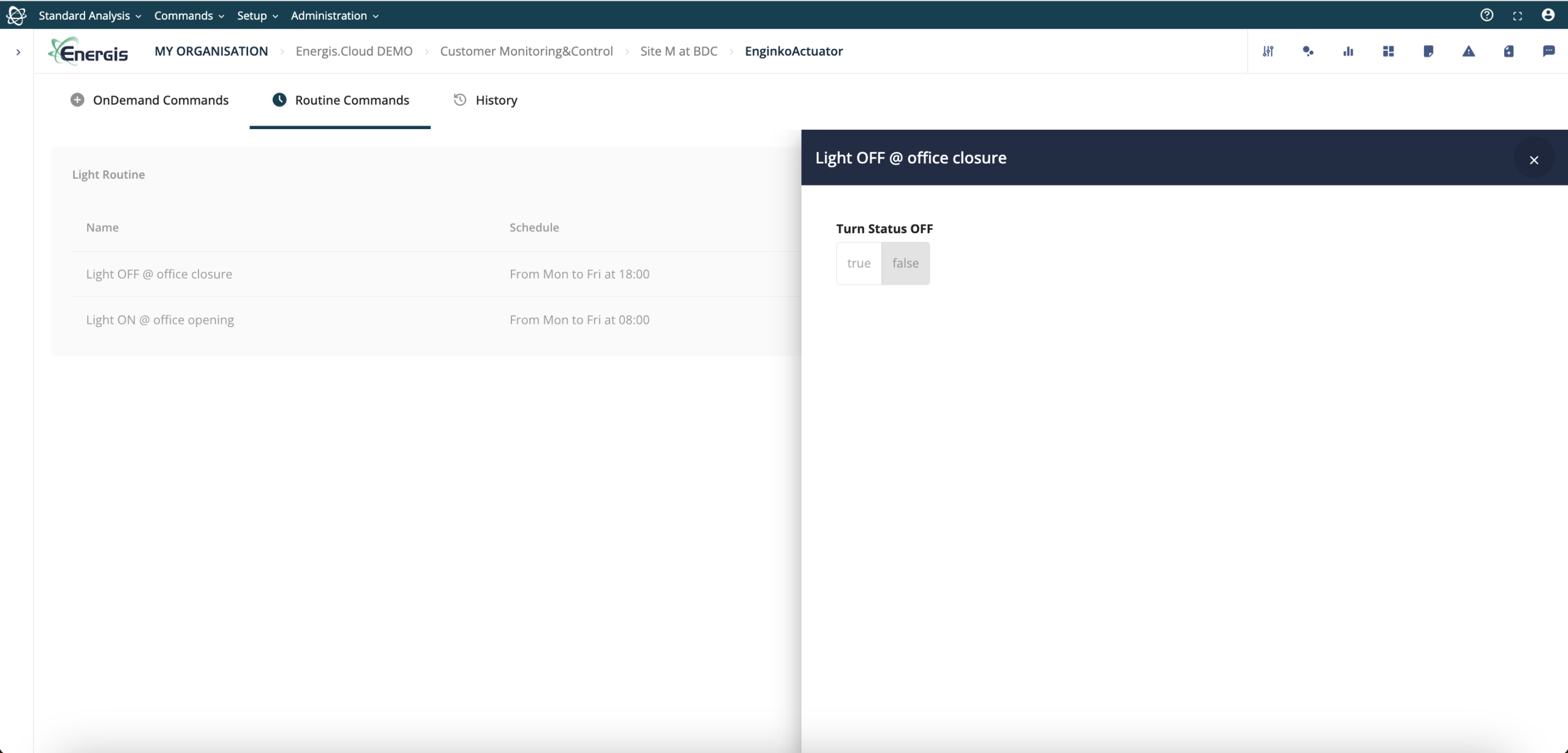
Energis.Cloud supports remote lighting control via its gateway, enabling central monitoring and control of lighting systems where required. While not all lighting needs to be connected to the BACS, Energis.Cloud provides a clear and scalable way to manage compliant lighting strategies across a building or portfolio.
Across a multi-site portfolio, fragmented energy data is the primary barrier to operational excellence. For Portfolio and Energy Managers, this lack of centralized intelligence creates a “visibility gap”—masking waste, preventing accurate benchmarking, and forcing a reactive approach to rising costs. Transitioning from manual data collection to strategic performance is the only way to secure long-term portfolio objectives. A centralized energy management platform acts as the essential operational engine for this transformation. It transforms disparate site data into a single, high-integrity source of truth, enabling portfolio-wide control, auditable savings, and long-term operational resilience.
G. Monitoring indoor environmental quality
BACS also plays a role in ensuring a healthy indoor environment.
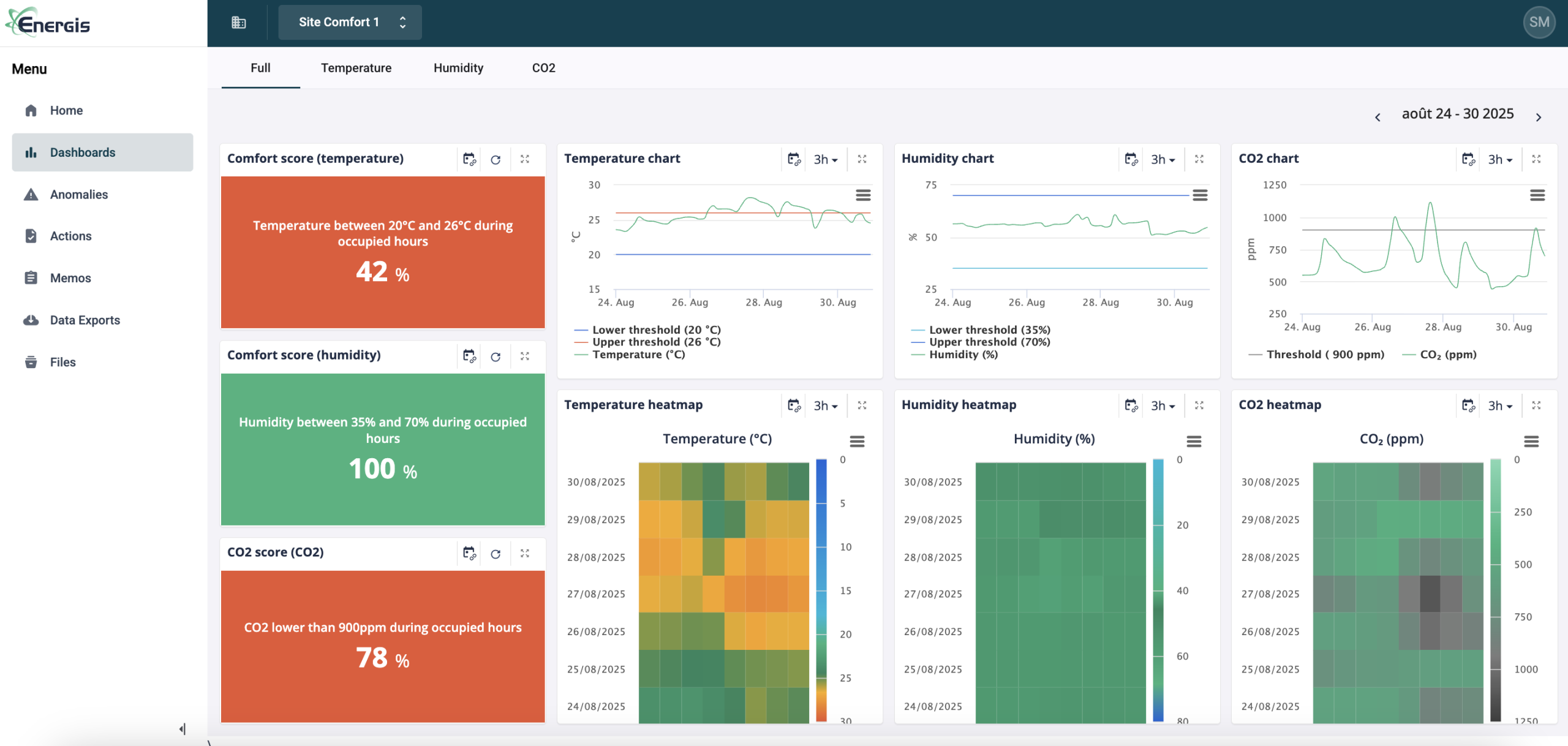
Energis.Cloud Indoor Air Quality & Comfort Monitoring Application integrates indoor air quality and comfort sensors that monitor:
- Temperature
- Relative humidity
- CO₂ levels (in line with Belgian quality requirements)
Clear dashboards make indoor comfort visible for facility teams, while also supporting occupant wellbeing.
In summary
BACS compliance does not have to be a burden. With Energis.Cloud, it becomes a structured, scalable and future-proof approach to energy management.
By integrating data, analysing performance, managing alarms and supporting control of technical systems, Energis.Cloud helps organisations meet Belgian BACS requirements before the end-2025 deadline — while simultaneously reducing energy costs and emissions.
Ready to see Energis.Cloud in action?
Ensure your portfolio is compliant, efficient, and ready for the future of energy management. Our experts are ready to show you how our platform simplifies BACS requirements while delivering tangible ROI.
Frequently Asked Questions
Is Energis.Cloud a replacement for my BMS?
No. Energis.Cloud complements existing BMS solutions and integrates with them, acting as a central energy intelligence layer.
Can Energis.Cloud handle multi-site portfolios?
Yes. The platform is designed for organisations managing multiple buildings, with consistent monitoring and benchmarking across sites.
Is Energis.Cloud future-proof for upcoming regulations?
Absolutely. Energis.Cloud continuously evolves with new regulatory and technological developments, including upcoming lighting and indoor air quality requirements.
How long does it take to get started?
Thanks to flexible data integration, many organisations can start monitoring and analysing energy data within weeks, not months.
Do Energis experts help with the setup and configuration?
Yes. Energis experts actively support customers during onboarding and configuration. They help define the right architecture, select relevant KPIs, configure anomalies, and ensure the platform is aligned with both operational needs and regulatory requirements.
Which data sources can Energis.Cloud integrate with?
Energis.Cloud supports a wide range of data sources, including:
- Building Management Systems (BMS)
- Energy meters (electricity, gas, heat, water)
- Sub-metering and IoT sensors
- Renewable energy systems such as photovoltaic installations
Integration can be done via standard protocols, APIs, or gateways, depending on the existing infrastructure.
Which BMS systems are supported today?
Energis.Cloud already integrates with many commonly used BMS platforms and field systems. When a direct integration is not available, Energis experts propose alternative approaches, such as protocol gateways or additional instrumentation, to ensure reliable data access without disrupting existing systems.
What if my building has limited or no BMS data?
That is not a blocker. Energis.Cloud can operate with partial data and can be gradually enriched over time. Additional meters or sensors can be deployed to unlock insights, while the platform scales as the building’s digital maturity increases.


